
How to Improve the Measurement of Youth Partnership:
A Conversation with Nestor Atukwase
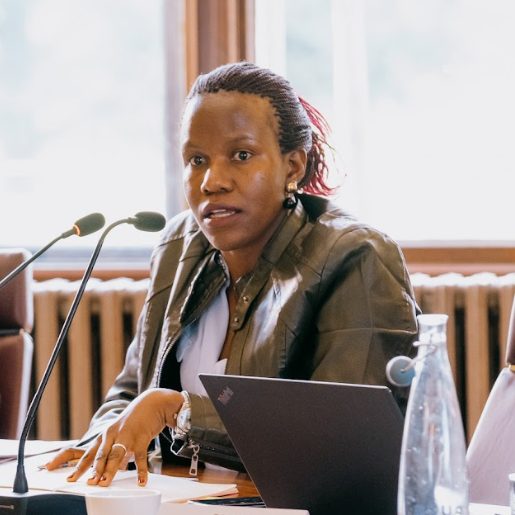
Nestor Atukwase
Global Monitoring, Evaluation and Learning Manager at Restless Development
Nestor Atukwase is the Global Monitoring, Evaluation and Learning Manager at Restless Development. She has been demonstrated a longstanding commitment to strengthening youth partnership in programming and evaluation spaces over the years. This commitment is what motivated Nestor to join the YIELD Hub’s Theory of Change Working Group, a virtual space where diverse youth and adult partners come together to reimagine how the AYSRHR field can hold itself accountable to genuine youth partnership.
In this blog post, she is interviewed by Yemurai Nyoni, the Monitoring and Evaluation Associate at the YIELD Hub. Over the course of the interview, Nestor explores the importance of the accurate measurement of youth partnership, in improving AYSRHR programmes. She gives guidance on how to use the new Theory of Change (ToC) and indicator guide, as well as general reflections on gaps in the field of youth partnership.
What inspired you to join the ToC on Youth Partnership in AYSRHR working group?
“I joined the working group because I saw the need for a shared vision, grounded in real-world experiences and forward-thinking strategies, to guide the field in moving beyond tokenism toward transformational youth partnership. The opportunity to co-create a ToC that would shape not just how we think about youth partnership but how we measure it was both timely and essential. The YIELD Hub’s action-learning approach, and its commitment to norm change, inspired me to contribute to a process that could catalyze systemic shifts across AYSRHR initiatives”
What was your role in the working group, and how did you contribute to creating the ToC and indicator guide?
“As a member of the Working Group, I brought experience in monitoring and evaluation, youth leadership, and participatory design. I contributed by reviewing and refining key outcomes in the ToC, offering insights on how youth power and accountability mechanisms can be integrated as measurable changes”
Youth partnership seems like a new or different concept from ideas such as youth participation and youth engagement. From your understanding, please explain what youth partnership in AYSRHR is and how it links with broader youth movements.
“Youth partnership goes beyond participation or engagement, it is about shared decision-making, mutual accountability, and valuing the expertise of young people as co-creators and leaders. It aligns with broader youth movements by recognizing young people not just as beneficiaries but as agents of change in global efforts around equity, justice, and health. In the AYSRHR field, youth partnership means that adolescents and youth are meaningfully shaping the policies and programs that affect their bodies, lives, and futures”
What role can youth partnership play in improving AYSRHR outcomes?
“When young people are truly partnered with, programs become more relevant, equitable, and effective. Youth partnership strengthens legitimacy, responsiveness, and sustainability in AYSRHR initiatives. It enables more grounded decision-making and ensures that interventions are aligned with the lived realities of those they aim to serve. Ultimately, partnership fosters trust and increases the likelihood that rights-based outcomes will be realized”
What is the purpose of a theory of change on youth partnership in AYSRHR? Is it necessary? Is it important?
“The Theory of Change provides a shared vision and roadmap for how youth partnership can drive change in AYSRHR. It is both necessary and important because it helps align diverse stakeholders, clarify pathways of impact, and guide investment and programming decisions. It also supports advocacy and accountability by making the case for why youth partnership matters and how it can be measured”
What makes this ToC different from other tools in the AYSRHR field? What makes it unique?
“This ToC is both necessary and timely. As the AYSRHR landscape evolves, we need tools that reflect current global trends and acknowledge the changing roles of youth in shaping systems. The ToC helps organizations clarify their assumptions, strategies, and desired outcomes related to youth partnership. It also supports a shift in mindset from doing things ‘for’ young people to doing things ‘with’ them, and eventually being led ‘by’ them”
What are the current gaps in measuring change in youth partnership in AYSRHR, and how does the indicator guide help address this? What gaps remain?
“What sets this ToC apart is its grounding in action learning and its co-creation process. It is not a top-down model; it reflects the lived experiences and insights of both youth and adults who have worked in the field. The ToC is not just a diagram or theory—it is a dynamic, values-based framework that connects norm change, systems transformation, and practical implementation. It explicitly centers partnership as an outcome, not just a means”
How can individuals and organisations working in the AYSRHR field best use this new ToC and indicator guide?
“One major gap is the lack of standard, youth-informed indicators that can track progress toward genuine partnership. Many current tools measure participation as attendance or involvement, but not the quality or depth of power-shifting. The indicator guide addresses this by offering concrete, scalable measures that organizations can adapt based on context. However, gaps remain on how to measure shifts in power dynamics over time”
Do you have any closing reflections?
“Being part of the Yield Hub Theory of Change Working Group was not just a technical exercise; it was a values-driven and deeply intentional process. It reaffirmed that youth partnership is not a destination but a continuous journey of trust-building, power-shifting, and mutual growth. This ToC and indicator guide are key resources to support that journey—not just for one organization, but for the entire AYSRHR field”
The field of AYSRHR has made significant progress over the years in integrating youth participation at all levels, however, the quality of these efforts has remained inconsistent. The value of a consolidated theoretical and measurement framework for youth partnership is that it helps set the standard for what is considered to be progressive and transformative youth partnership. The contributions of young evaluation experts like Nestor, are helping to build consistency into the measurement of youth partnership in AYSRHR across the globe, and are helping partners in their quest for more meaningful and inclusive youth participation.
The new Theory of Change on Youth Partnership in AYSRHR has been released with a set of guidelines that include sample indicators for use in tracking changes in youth partnership at individual level, within the SRHR ecosystem, and in society. You can access the ToC and its related resources here:
If you or your organisation would like to sign on to endorse and amplify the ToC, please follow this link:
Meanwhile, look out for updates on the YIELD Hub platforms on new opportunities to strengthen the measurement of youth partnership in AYSRHR.